Concrete Cleaning 101: Why Driveways Get Dark (and How Pros Fix It)
If you have noticed your driveway turning gray, blotchy, or almost black, you are not alone. Concrete in New Jersey lives through humid summers, leaf fall, road salt in winter, and lots of shade from trees. That mix feeds stains and growth that ordinary rinsing cannot remove. This guide explains what causes dark concrete and how professional surface cleaning restores curb appeal safely and fast.
What Makes Concrete Turn Dark In NJ
Concrete is porous. Tiny openings act like sponges for water, oil, pollen, and grit. Over time, grime settles into those pores and bonds to the surface. In NJ, changing seasons speed that up. Summer humidity and shaded areas promote the spread of black algae and mildew. Winter brings de-icing salt and meltwater that leave a dirty film and deepen discoloration.
Common culprits include:
- Organic growth, such as black algae on concrete and mildew in shaded, damp spots
- Vehicle leaks, such as oil and transmission fluid, that soak into the pores
- Road salt, fertilizers, and general street film carried by tires and snow
- Leaf tannins and acorns stain the surface in fall
- Rust from metal furniture or irrigation overspray with iron
Left alone, that mix darkens the slab and can make it slick when wet. It also makes the entrance of an otherwise tidy home look tired, even if the rest of your property is spotless.
Why Professional Surface Cleaning Works Better
Many stains sit below the top layer of concrete. Simple hosing or a light consumer washer pushes dirt around without extracting it. Professional surface cleaning uses commercial pressure, controlled heat, and concrete-safe detergents to break the bond between the stain and the pore walls. A pro also balances water pressure and flow so the slab gets an even clean without tiger stripes.
Professionals rely on three pillars:
- Chemistry that loosens organic growth and road film so it can lift out
- Heat that accelerates cleaning, especially on oils and winter residue
- Mechanical action from a rotary surface cleaner for consistent results
When these work together, the surface brightens evenly. Deep-set grime is released, algae is neutralized, and the driveway looks uniform from edge to edge.
Hot Water Cleaning Versus Cold Water
Hot water cleaning is a big advantage for NJ driveways that see snow, salt, and vehicle drips. Heat helps emulsify oils and soften the film that hides in the pores. It also speeds up dwell times so technicians can rinse sooner and leave the concrete ready to dry. Cold water can remove loose dirt, but heated systems typically restore lighter color with fewer passes and less detergent.
Heat is not a magic wand. It still has to be paired with the right detergent and safe pressure so the cream layer of the concrete is not etched. Pros match temperature and chemistry to the stain type and weather, so your slab gets cleaned the right way the first time.
How Pros Tackle Black Algae On Concrete
Black algae on concrete loves shaded sides of homes, north-facing walks, and areas by dense landscaping. It forms a stubborn film that looks like soot but clings like glue. A professional approach targets the growth and its roots in the pores. That means applying a cleaner designed to kill and release the organism, allowing time for it to work, then using a surface cleaner for a uniform rinse.
Because algae can return where shade and moisture remain, your technician may suggest simple environmental tweaks like improving drainage or trimming dense bushes near the driveway edge. Those adjustments help your clean last longer without you needing to scrub or experiment with harsh products.
What To Expect From A Professional Visit
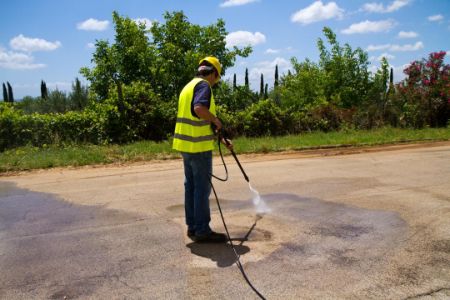
Every home and slab is different, but a typical visit follows a reliable workflow. Your technician inspects the driveway, notes sensitive areas, and selects the proper detergent. Edges, joints, and stains get pre-treated. Then, a surface cleaner delivers a steady, even clean across the main area so you do not see wand marks. Rinsing and a final pass around steps and borders finish the look.
If your driveway has heavy oil spots or rust, pros may apply a targeted cleaner for those specific stains. They will also watch for runoff so landscaping stays safe. That balance of skill and equipment is what separates a bright, uniform result from a patchy one.
NJ’s freeze-thaw cycle can worsen tiny cracks if dirty water sits in the pores. Cleaning before the first hard freeze helps reduce slippery algae and keeps salt film from building up. Schedule service in fall or early spring so your slab looks great and dries quickly.
Seasonal Realities For New Jersey Homes
New Jersey’s climate matters. In summer, humidity and shade give algae the moisture they need. Along the shore, salty air and mist add a fine film that darkens flatwork. In winter, plows and parking lot salt tag along on your tires and leave residue at the apron. Spring pollen and seed pods settle into every crack and joint. Each season adds a layer. Professional maintenance cuts through those layers safely.
Neighborhoods with mature trees face extra leaf tannins and acorns each fall. Suburban routes near busy roads tend to see soot and fine dust. If you notice a darker strip where your tires track, that is normal. It is also a sign your slab is overdue for a deep clean.
Safety, Landscaping, And Clean Water Considerations
Safe cleaning protects your concrete, your lawn, and your family. Trained technicians control runoff and shield beds where needed. They choose detergents that break down as designed and rinse plants to keep them healthy. Equipment is set so joints and expansion cuts do not blow out and delicate surfaces nearby stay intact.
Avoid harsh acids or strong chlorine mixes that can etch concrete or burn nearby plants. Those products can lighten spots unevenly and weaken the surface paste. Pros avoid that risk by using the right cleaner for the right stain at the right strength. That is how they lift dark films while preserving the finish.
How Long Results Last And What Extends Them
Longevity varies by shade, traffic, and weather. In NJ, a thorough clean can look great for many months, often through a full season, and longer in sunny, open drives. Shaded sides and tight cul-de-sacs may see algae return sooner. Discuss a maintenance interval that fits your home’s setting so grime never has a chance to take hold again.
Simple habits help. Rinse heavy pollen or fresh leaf litter from the apron when you can. Park with care after a mechanic visit if tires are coated in treatment sprays. These small choices reduce what soaks into the pores between services.
What Makes A Professional Finish Look “Like New”
A uniform clean is the prize. That comes from overlapping passes with a rotary surface cleaner, matched pressure and flow, and the right rinse technique. Pros also detail edges and stairs, so the transition from driveway to walk looks seamless. Corners, borders, and the area near the garage door get special attention because that is where shadows reveal lines if the work is rushed.
Quality gear matters too. Commercial machines deliver stable pressure and hot water cleaning at scale. Hoses, tips, and cleaners are chosen specifically for concrete. The result is a brighter, more even driveway without striping or cloudy patches.
Professional Services That Target Concrete Problems
Not every stain is the same. That is why focused treatments matter. For widespread road film and algae, a broad application and surface cleaning restore the overall look. For spots like oil or rust, targeted products are used before the main clean, so the final finish is even. If your driveway meets a public sidewalk, techs blend the two surfaces so you do not see a stark line between them.
Curbs, stoops, and adjoining walks benefit from the same approach. Keeping all connected concrete bright makes the whole front of the house feel cared for. It also improves safety by reducing slick biofilm near steps and entries.
When It Is Time To Call A Pro
Watch for these signs:
- Tire tracks that remain dark after rain
- Black streaks or blotches in shaded areas
- Brown or orange spots from leaves or rust that do not lift with a rinse
- A dull gray haze across the whole slab
These are clues that stains have settled into the pore structure, not just on top. A professional visit clears that build-up and brings the lighter, original tone back.
How AAA Pressure Wash Restores NJ Concrete Safely
Homeowners choose a local pressure washing company because they want a clean driveway without risk. AAA Pressure Wash pairs commercial equipment with field-tested methods made for New Jersey conditions. We pre-treat problem areas, use controlled hot water when it helps, and run a rotary tool that delivers an even finish across the entire slab.
If you want a deeper dive into the process, see our detailed overview of our concrete cleaning service. It explains how chemistry, heat, and steadiness create a cleaner, brighter look that lasts through our seasons.
Answering Common Homeowner Concerns
Will cleaning damage the concrete? With the right settings and tools, no. The goal is to remove contamination, not surface paste. Will plants be safe? Yes, when pros control dwell time and rinse plants as needed. Will stripes appear? Not with a quality surface cleaner and steady technique.
Scheduling around weather is simple. Many NJ homeowners choose early spring to start fresh or fall to clear salt and grime before winter. Your technician can recommend the best window based on shade patterns and drainage at your property.
Care Right After Service
Dry time varies with sun and breeze. You can usually walk on the slab soon after the rinse. For vehicles, wait until the surface looks dry and the team confirms it is ready. Let cleaned concrete dry fully before parking heavy vehicles. This helps any treatment finish its work and protects joints.
If your driveway has deep-set spots, a light shadow may fade more over the next few days as the slab continues to dry. That is normal and part of how concrete releases moisture from its pores.
See The Difference On Your Block
When one driveway gets bright, neighbors notice. Clean concrete makes paint colors pop and landscaping feel sharper. It also welcomes guests with a safer, less slippery approach to your door. That upgrade in curb appeal is why many customers add walkways and front steps to their visit, so the whole entry looks consistent.
If your home has heavy shade on the north side or sits near tall oaks, a simple seasonal plan keeps algae from taking hold again. Your technician can suggest a refresh interval that fits your setting, with no guesswork on your part.
Ready For A Brighter Driveway?
Schedule professional concrete cleaning in NJ with AAA Pressure Wash today. A short visit can lift years of buildup and reveal a lighter, safer surface. To talk through your goals and pick a date that fits the weather, call us at 888-857-5441.
You can also learn how our team approaches professional surface cleaning in NJ, so you know exactly what to expect before we arrive. For a broader look at services and expertise, start at concrete cleaning NJ and explore how we care for driveways, walks, and more across the Garden State.